


Canada’s data center industry is entering a major period of growth as cloud computing, artificial intelligence, streaming, enterprise software, and other digital services continue to increase demand for computing power. Data center development is no longer concentrated only in established technology markets. Ontario and Quebec remain important hubs, while Alberta and British Columbia are attracting some of the country’s largest proposed AI infrastructure projects.
For businesses operating, upgrading, consolidating, or closing data center environments, this growth has another important consequence: more servers, storage devices, routers, switches, cables, and other computer networking equipment will eventually reach the end of their useful life. Responsible recycling and secure data destruction therefore need to be part of the infrastructure lifecycle from the beginning.
At Re-Source Recycling, we help businesses manage obsolete computers, servers, networking equipment, hard drives, and other electronics through secure collection, data destruction, dismantling, and material recovery. Our electronic recycling services are designed for businesses, organizations, governments, and large-scale projects across Canada.
Why Is Canada Building More Data Centers?
Modern digital services require a huge amount of computing infrastructure. Cloud applications, artificial intelligence, online commerce, financial services, video platforms, enterprise systems, and connected devices all depend on servers and data transmission networks.
The Canada Energy Regulator estimated that 239 data centers were operating across Canada in 2024, with Ontario having the highest number, followed by Quebec and British Columbia. The regulator also noted that data centers and their associated networks consume significant amounts of energy and that demand is increasing as AI development expands.
More recent market research shows how quickly the sector is changing. Colliers reported in October 2026 that Canada had 1,415 MW of commissioned data center capacity, with Ontario and Quebec leading the existing market. It also tracked at least 5.5 GW of named planned and under-construction capacity, with Alberta representing much of the visible new pipeline.
This expansion means the Canadian data center ecosystem is becoming larger, more distributed, and increasingly focused on high-performance computing and AI.
Major Hyperscale Cloud Providers in Canada
Canada is becoming a major market for cloud and AI infrastructure, with several global technology companies expanding their data center presence.
- Microsoft Azure: Microsoft is expanding its cloud and AI infrastructure across Ontario, including the Vaughan and Markham areas, supported by a broader C$19 billion Canadian investment.
- Amazon Web Services (AWS): AWS operates Canadian cloud regions in Montréal and Calgary, supporting cloud, enterprise, and AI workloads.
- Google Cloud: Google Cloud operates regions in Montréal and Toronto, providing infrastructure for cloud and high-performance computing.
- Meta: Meta is developing its first Canadian data center in Sturgeon County, Alberta. The AI-focused facility is planned at 1 GW with an investment exceeding C$13 billion.
- Oracle and IBM: Both companies provide enterprise cloud infrastructure in Canada for applications, databases, analytics, and other business workloads.
Together, these providers are helping drive Canada’s growing cloud and AI data center ecosystem.
Some of Canada’s Largest AI Data Center Projects
Canada is attracting major investments in AI data centers, with several large-scale projects planned or under construction across Alberta, Ontario, and British Columbia. These developments reflect the growing demand for high-performance computing and AI infrastructure.
- Meta Sturgeon Data Centre — Alberta
Meta’s Sturgeon County data center is one of Canada’s largest AI infrastructure projects. The facility is planned with 1 GW of capacity and represents an investment of more than C$13 billion. Construction began in 2026, with the facility expected to become operational in 2028.
- Wonder Valley — Alberta
The Wonder Valley AI Data Center Park has been proposed as a large AI infrastructure development in Alberta’s Greenview Industrial Gateway. Plans have outlined potential capacity of approximately 7.5 GW, although the project remains in development and its final scale and timeline may change.
- Beacon AI Centers — Alberta
Beacon AI Centers has announced a multi-site Alberta development with approximately 4.5 GW of planned capacity. The project is part of Alberta’s growing AI data center pipeline, with some sites targeted to begin energizing as early as 2027.
- Microsoft Markham AI Campus — Ontario
Microsoft is expanding its cloud and AI infrastructure in the Markham/Vaughan area. One major development is reported at approximately 112 MW of planned capacity, supporting the company’s broader investment in Canadian AI and cloud computing.
- Bell AI Fabric — British Columbia
Bell AI Fabric is planned as a national AI infrastructure network beginning with a major data center presence in British Columbia. Bell has announced plans for up to 500 MW of hydroelectric-powered AI computing capacity across six facilities.
These projects demonstrate how Canada’s AI data center industry is expanding across multiple provinces, creating greater demand for advanced servers, networking equipment, storage systems, and supporting infrastructure.
Major Data Center and Colocation Providers
Alongside hyperscale operators, Canada has a strong colocation market that helps businesses deploy servers and networking infrastructure without building and operating their own facilities.
Major providers include:
- Digital Realty
- Cologix
- eStruxture
- Equinix
- Vantage Data Centers
- OVHcloud
- Yondr
- Hypertec Datacentres
EStruxture, for example, describes itself as a Canadian data center platform with facilities across Montréal, Toronto, Calgary, and Vancouver. Its current AI-ready infrastructure supports high-density computing and is designed for workloads such as GPU computing, machine learning, and large-scale AI applications.
As these facilities expand, operators must continuously balance new infrastructure deployment with the replacement and retirement of older hardware.
Canada’s Main Data Center Hubs
Canada’s data center footprint is becoming more geographically diverse, but several markets remain particularly important:
- Toronto and the Greater Toronto Area: Toronto and the GTA remain major enterprise, cloud, connectivity, and colocation markets. The area has a mature digital infrastructure ecosystem and continues to attract major cloud and AI investments.
- Montréal: Montréal is one of Canada’s major data center hubs and benefits from extensive cloud infrastructure and access to large-scale power resources. Google, AWS, colocation companies, and other technology providers maintain important infrastructure in the region.
- Calgary and Edmonton: Alberta is becoming increasingly important for new AI infrastructure. Calgary already has established colocation capacity, while the Edmonton and Sturgeon County areas are attracting very large AI developments.
- Vancouver: British Columbia remains an important technology and connectivity market and is also becoming more prominent in AI infrastructure through projects such as Bell AI Fabric.
- Québec City and Beauharnois: Other locations in Quebec continue to contribute to Canada’s broader data center ecosystem, particularly as operators look for suitable combinations of power, connectivity, land, and infrastructure.
What Happens to Old Servers and Networking Equipment?
A growing data center does not simply add equipment. It also creates a continuous cycle of hardware retirement.
Servers become outdated. Storage devices are replaced. Network switches and routers are upgraded. Cables, racks, peripherals, computers, and other electronic components are removed during infrastructure changes.
These materials should not simply be treated as ordinary waste.
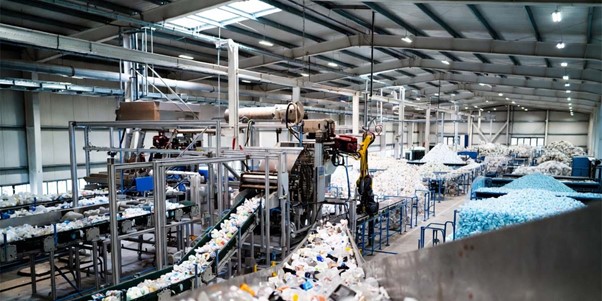
Re-Source Recycling accepts a wide range of computing and networking equipment, including computers, laptops, servers, routers, switches, modems, cables, printers, and other electronics. Our electronic recycling process includes collection and transportation, sorting and inventory, secure data destruction where required, dismantling, component recovery, and material refinement.
Recovered electronics can contain valuable materials such as copper, gold, silver, palladium, plastics, circuit boards, and other components that can be processed for reuse.
How Re-Source Recycling Helps Data Center Operators
Data center equipment contains two separate concerns: material value and information security.
Simply removing an old server from a rack does not solve either problem.
At Re-Source Recycling, we provide a comprehensive service that can begin with pickup and hardware removal and continue through dismantling and material recovery. This can make equipment retirement easier to manage during data center upgrades, relocations, consolidation projects, and technology refreshes.
Our electronics recycling services are available for businesses, organizations, government agencies, and larger projects. With more than 25 years of experience, we understand that different organizations have different equipment volumes, security requirements, and recycling needs.
For organizations with obsolete inventory or equipment that must be permanently removed from circulation, our product destruction and inventory destruction services can provide another layer of secure handling.
The Importance of Secure Data Destruction
Servers, hard drives, solid-state drives, and other storage media can contain confidential business information, customer records, employee information, intellectual property, or other sensitive data.
Deleting files or formatting a drive does not necessarily provide the level of protection required for end-of-life equipment. Re-Source Recycling provides certified data destruction for hard drives and other electronic storage media, along with Certificates of Destruction documenting that the information has been irreversibly destroyed.
For companies upgrading large numbers of servers or replacing networking and storage infrastructure, documented destruction can provide an important record of how sensitive equipment was handled.
Our electronic recycling services also reference R2-V3, MOE, OES, and ISO 14001 capabilities as part of our commitment to secure, responsible e-waste management.
Building a More Responsible Data Center Lifecycle
Canada’s data center expansion is likely to generate more demand for servers, GPUs, networking hardware, storage systems, power equipment, and other electronics.
That makes end-of-life planning just as important as deployment planning.
A responsible lifecycle should answer several questions:
- What happens when the equipment is removed?
- How will sensitive information be destroyed?
- What records will document the process?
- Which components can be recovered?
- How can recyclable material stay out of landfills?
- Can the process support sustainability and compliance goals?
These questions become especially important as organizations move through large-scale equipment refreshes or decommission entire server environments.
At Re-Source Recycling, our goal is to make that process secure, organized, and environmentally responsible. From collecting obsolete computers and servers to destroying storage media and recovering valuable materials, we help organizations manage electronic equipment after it leaves the data center.
A Growing Data Center Industry Creates a Growing Recycling Responsibility
Canada’s data center market is changing quickly. Major cloud providers are expanding. Large AI facilities are being proposed and built. Colocation providers are investing in higher-density infrastructure. Existing facilities are also continually upgrading their equipment.
The result is a much larger technology lifecycle.
Every new generation of computing infrastructure eventually creates an old generation that needs to be removed safely.
Re-Source Recycling can help businesses manage that transition with secure electronics recycling, data destruction, hardware removal, and responsible material recovery. With extensive experience serving commercial, institutional, industrial, and government clients, we provide a practical solution for organizations that need more than a simple electronics drop-off.
Let Re-Source Recycling Handle Your End-of-Life Data Center Equipment
Whether you are retiring servers, replacing networking hardware, consolidating a data center, or managing a large electronics refresh, Re-Source Recycling can help you plan a secure and responsible next step.
Contact us to discuss your equipment, project requirements, pickup needs, and data destruction requirements.
FAQs
- What types of data center equipment can be recycled?
Re-Source Recycling handles computers, laptops, servers, routers, switches, modems, cables, peripherals, and many other types of electronic equipment.
- Can old servers be recycled securely?
Yes. Equipment containing data can go through certified data destruction processes before the remaining materials are dismantled and recycled.
- Is data destruction available for hard drives and SSDs?
Yes. Re-Source Recycling provides data destruction services for hard drives and other electronic storage media and provides Certificates of Destruction.
- What happens to servers after they are collected?
The equipment can be collected and transported to the recycling facility, where it is sorted and inventoried. Data-bearing devices undergo destruction where required, followed by dismantling and material recovery.
- Can networking equipment such as switches and routers be recycled?
Yes. Re-Source Recycling specifically lists routers, switches, modems, and cables among its networking equipment recycling services.
- Can Re-Source Recycling manage large data center projects?
Yes. The company states that it can handle electronic recycling projects of different sizes for businesses, organizations, government agencies, and other clients.