


Many businesses believe they have a perfect handle on their waste, but common cardboard recycling errors often lead to higher costs and environmental waste. At Re-Source Recycling, we define effective waste management as a process that maximizes resource recovery while minimizing contamination. Avoiding these mistakes matters because it ensures your materials actually get repurposed instead of ending up in a landfill. By fixing your sorting and prep habits, you help lower your carbon footprint and streamline your daily operations. This guide explores the most frequent errors we see and provides simple, expert-backed solutions to optimize your facility’s green strategy.
The Cost of Improper Box Disposal
When we walk through commercial warehouses, we often see money being thrown away. Many managers don’t realize that haulage companies often charge by the “pull” or the volume of the container. If your bins are filled with air because boxes aren’t prepared correctly, you are paying to transport empty space.
Beyond the financial cost, there is a massive environmental impact. Contaminated loads cannot be processed. If one greasy pizza box or a bundle of wet paper enters the stream, the entire batch might be rejected. This sends tons of potentially useful material straight to the landfill, defeating the purpose of your green initiatives.
Top Mistakes Your Team Is Likely Making
We have spent over 25 years helping companies refine their waste processes. During that time, we have noticed a few recurring themes that slow down productivity and hurt sustainability goals.
- Food and Liquid Contamination:
Even a small amount of oil or moisture can ruin the fibers of your paper products. We always advise teams to ensure that only clean, dry corrugated material enters the collection bins. If a box has held food or chemicals, it belongs in the general waste. - Leaving Plastic Liners Inside:
Many shipments arrive with plastic film, bubble wrap, or styrofoam inside the boxes. If these items are left behind, they jam the sorting machinery at the processing facility. Taking a few seconds to strip the interior of the box makes a world of difference. - Ignoring Heavy Tape and Staples:
While most modern facilities can handle a little bit of adhesive, heavy-duty packing tape and large metal staples should be removed. These materials lower the quality of the final recycled product and can damage the baling equipment we use at our facility.
Steps to Streamline Your Waste Stream
To fix these issues, we recommend implementing a standard operating procedure for your staff. Consistency is the key to a successful program.
- Flatten Every Box: Use a safety cutter to break down the seams and stack the material flat to save space.
- Remove Non-Paper Items: Strip away all plastic wrap, foam peanuts, and large metal clips.
- Keep it Dry: Ensure your outdoor bins have secure lids so rain and snow don’t soak the materials.
- Label Your Bins Clearly: Use visual cues and multi-language signs so every employee knows exactly where the material goes.
Why Data Security Matters in Your Blue Bin
One of the most overlooked mistakes involves privacy. We often find shipping labels containing names, addresses, and internal tracking numbers still attached to boxes. For businesses handling sensitive inventory, this is a major security risk.
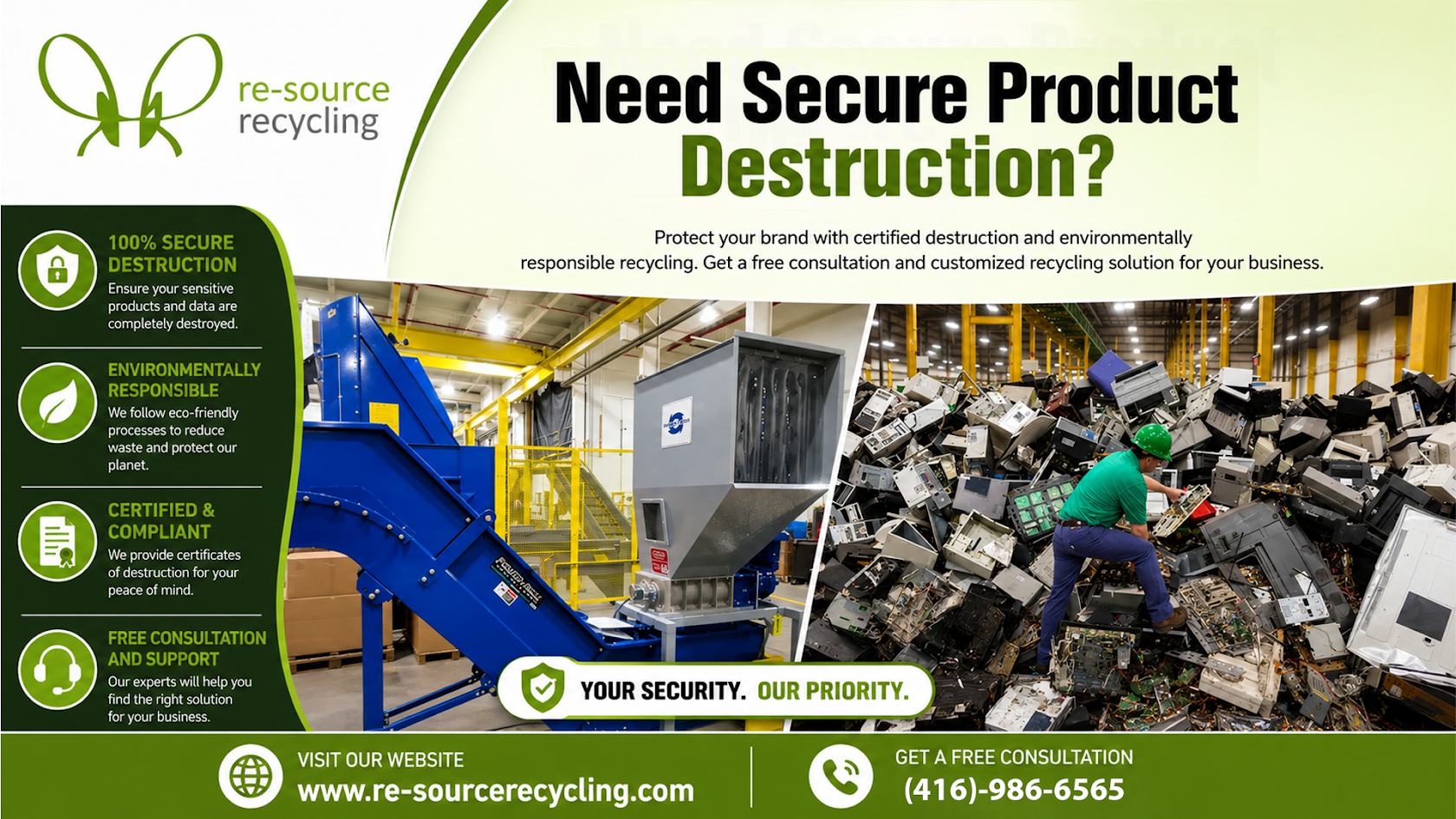
At Re-Source Recycling, we advocate for a secure approach to disposal. If your packaging contains proprietary information or branded logos that could be misused, simple disposal isn’t enough. We offer certified destruction options to ensure your brand reputation stays protected while your materials are handled sustainably.
Managing Diverse Waste Streams Efficiently
A truly green business doesn’t stop at paper. Most modern offices and warehouses generate a variety of materials that require specialized handling. For instance, when you upgrade your office workstations or server rooms, you cannot simply toss the old gear into the same bin as your boxes.
Integrating electronics recycling into your broader waste strategy ensures that heavy metals and sensitive digital data are handled according to Ministry of Environment standards. We specialize in managing these multi-material needs, allowing you to have one point of contact for everything from plastic and metal to organic waste and obsolete tech.
Partnering for a Greener Future
Avoiding these common mistakes is the first step toward a more efficient and sustainable business model. At Re-Source Recycling, we bring over 25 years of experience to the table, helping businesses across Canada manage their waste with precision and care. As a Ministry of Environment Licensed Facility, we prioritize security, confidentiality, and environmental stewardship in everything we do.
Whether you need a reliable partner for high-volume disposal or a secure solution for sensitive product destruction, we are here to help. Our team can audit your current processes, identify where you are losing money, and provide the technology, like our high-speed shredders, to get the job done right.
Ready to fix your recycling mistakes and save on waste costs? Contact us at Re-Source Recycling today at (416) 986-6565 for a free consultation. Let’s build a cleaner, more secure future together.
FAQs
- How do I know if my cardboard is too contaminated to recycle?
If the material is soaked with oil, grease, or chemicals, it generally cannot be repurposed. Small amounts of clear tape are usually fine, but if the fibers are saturated with liquid, the box should be discarded. We recommend keeping your collection area dry to prevent rain damage.
- Does our business need a baler for our boxes?
It depends on your volume. If you generate several tons of waste per week, a baler can help compress the material, making it easier to store and cheaper to transport. For smaller businesses, we provide various bin sizes that we can service on a regular schedule.
- What happens to the material once it leaves our facility?
Once we collect your materials, they are brought to our Ministry of Environment licensed facility. We sort, clean, and bale the items. These bales are then sent to mills where they are turned into new packaging, closing the loop on the circular economy.
- Are there items that look like paper but aren’t recyclable?
Yes, items like waxed-coated boxes (often used for produce) and thermal receipt paper are not typically accepted. These materials have coatings that don’t break down easily in water, which is a necessary part of the pulping process at the mill.
- Can you provide documentation for our sustainability reports?
Absolutely. We provide detailed reporting and certificates of destruction when required. This data is essential for Fortune 500 companies and government agencies that need to track their diversion rates and prove they are meeting their corporate social responsibility goals.
- How do we handle boxes that had old tech inside?
This is a common scenario. You should separate the packaging from the devices. The boxes follow the paper stream, while the devices must go through a secure data wiping and dismantling process to ensure hazardous materials are recovered safely and no data is left behind.